Sunday, 9 February 2014

12 Years a Slave

Despite its challenging subject matter – or rather, because of it – 12 Years a Slave could so easily be dismissed as the sort of contrived, emotionally manipulative film specifically designed to woo the Oscar crowd. You know the type: rousing war epics, political dramas making defiant left field statements, biopics about controversial characters wrestling with their inner demons in the form of drug/alcohol addictions and, especially, Holocaust movies, which have become something of a punchline since that episode of Ricky Gervais’ film-set sitcom, Extras (“I've noticed that whenever you do a film about the Holocaust – guaranteed Oscar!”).
But while we’ve been exposed to the horrors of WWII and Jewish persecution on a fairly regular basis, the same cannot be said about the enslavement of African Americans throughout the 17th, 18th and 19th centuries in the United States, a dark chapter in the country’s history which hasn’t been tackled on-screen with the frequency it deserves. 15 minutes into Steve McQueen’s film, the reason will become obvious.

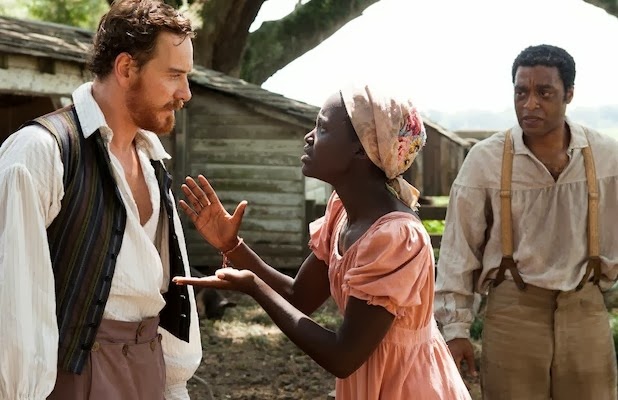
12 Years a Slave tells the true story of freeman Solomon Northup (Chiwetel Ejiofor), a talented violinist living with his family in Saratoga, New York who is lured to Washington with the promise of work, only to find himself captured and sold into slavery in Louisiana. Here he will endure 12 years of subjugation and all sorts of racial abuse at the hands of plantation owners and slave drivers, especially the tyrannical Edwin Epps (Michael Fassbender).

A Hollywood director could’ve mishandled 12 Years… by saddling it with heavy-handed moral lessons about equality and brotherhood (the only time we come close to this is with the brief appearance of Brad Pitt’s abolitionist carpenter, a character a little too angelic to be entirely believable), but British filmmaker Steve McQueen instead is bold enough to go down a darker route. He’s already proven with Hunger and Shame that he adopts an uncompromising approach towards the topics he confronts and therefore doesn’t flinch away from portraying the hardships of slavery that go beyond the “N” word and long hours spent in the plantation fields. Men and women are stripped and paraded for prospective owners to inspect, a mother is separated from her children with no sign of remorse whatsoever (“Your children will soon enough be forgotten”) and a foreman sings racist songs in a horribly misguided attempt to alleviate working conditions (Oh run nigger run well the pattyroller will get you/Run nigger run well you better get away). The audience doesn’t need a character to address what’s right and wrong for them – the material speaks itself.

It helps that our conduit into this oppressive world is Chiwetel Ejiofor, who infuses Solomon with the humanity and sincere emotion required to get us through such a brutal journey. An actor who throughout the past decade has excelled in small but memorable roles, it is immensely gratifying to see Ejiofor rise to leading man status and hold his own against some of Hollywood’s most exciting talents, including Pitt, Paul Giamatti, Benedict Cumberbatch and regular McQueen collaborator Michael Fassbender, who terrifies as ruthless yet self-loathing plantation owner Edwin Epps. But also worthy of mention is newcomer Lupita Nyong'o, who turns in a disarmingly committed performance as Patsey, a young slave who also happens to be the object of Epps’ affections. The scene in which the latter has her tied to a post and whipped to within an inch of her life before the helpless gazes of the other slaves makes for distressing viewing and will most likely be the scene that will remain with you long after the credits roll.

Like the horrific marks on the characters’ backs, 12 Years A Slave is a brutal yet necessary history lesson that will scar and move in equal measure. And considering the impressive number of Academy Award nominations it has stacked up, consider the Oscar crowd wooed.


5/5 

Sunday, 19 January 2014

The Wolf of Wall Street

"My name is Jordan Belfort. The year I turned 26, I made $49 million, which really pissed me off because it was three shy of a million a week." As far as opening lines go, you’re not likely to come across a better one in 2014 – it grabs your attention, raises a chuckle and makes for an economic introduction to the film’s insatiable protagonist. It also functions as a forewarning that we’re in for three hours of wild excess and moral decadence beautifully orchestrated by Martin Scorsese. When taken on those terms, The Wolf of Wall Street truly is a fascinating beast.

When we first meet Jordan Belfort (Leonardo DiCaprio), he is a wide-eyed wannabe yuppie eager to get rich the quick way via the wonders of stock brokerage. All it takes is one meal with a Wall Street hot shot for Jordan to realise the prospects this new world offers – “The name of the game: move the money from your client’s pocket into your pocket” crows Matthew McConaughey’s smarmy Mark Hanna, before adding that the secret to doing this job is hookers and cocaine. And just like that, Belfort’s fate is sealed.

What follows is a movie chronicling one man’s meteoric rise to power, as we witness Jordan go into business, build an empire of ruthless stockbrokers, manipulate the finance market to his every need and blow the money on a lifestyle almost too depraved to describe. Not even 30 minutes into the film, we’re already treated to office orgies, chimps on skates, midget throwing contests, breast implant auctions, naked marching bands and a relentless consumption of class A drugs, all of which were allegedly common occurrences at Belfort’s brokerage house, Stratton Oakmont.

Herein lays the biggest issue with TWOWS. For a film about stock brokers getting rich off the losses of their unsuspecting clients, no light is shed on the misery of the latter and far too much time is instead dedicated to the pleasure-seeking lifestyles of the former. By all means, viewers shouldn’t be lectured to and not every movie needs to come bow-wrapped in a moral, but considering we’re still dealing with the impact that the 2008 financial crisis has had on the global economy, a little more discretion on Scorsese’s behalf wouldn’t have been out of place.

Not that the director lets his characters completely off the hook, mind. If there’s one thing TWOWS does very well is reveal how an overabundance of riches and power will bring out the worst in us. Predictably, Jordan’s combined addiction to sex and drugs takes a gradual turn for the ugly, and while his colleagues come from humble origins, the moment the dosh comes piling in their laps (sometimes literally), they turn into insufferable fraudsters with giant egos. An early scene sees an office worker allowing her hair to be shaved in public and agreeing to undergo plastic surgery – all for a few thousand cash. The look on her face as her locks are clumsily removed is one of regret and humiliation barely concealed by weak laughter. It’s a quietly powerful moment in an otherwise OTT scene.

Yet despite the subtext about corruption, there’s no getting away from the fact that TWOWS is the funniest film Marty’s ever made (not to mention his raunchiest – he’s definitely never dedicated so much attention to pubic landscaping). Freeze frames and slow-motion are employed to brilliant comedic effect, while some characters reveal a Scrubsian inner monologue that adds hilarity to scenes already funny in their own right. As for the star of the show, Leonardo DiCaprio is something of a revelation. For someone who excels in dramatic roles and often comes across as a bit of a bore in the media, it’s a joy to see him this unhinged. His chemistry with regular funnyman Jonah Hill is evident, their banter rapidfire and instantly quotable (“I will NOT die sober!”), while the scene in which Jordan tries to drive his sports car under the effect of Qualuudes will have you in stitches. Who’d have thought Jack Dawson would turn out to be such a talented physical comedian?

Finally, the overlong running time does occasionally stretch patience and you’ll probably feel guilty for enjoying these characters’ company so much, but don’t let that get in the way of a damn good movie. Three hours of sex, laughs and hardcore drugs all wrapped up in a thick wad of cash, delivered by one of Hollywood’s most esteemed directors. How’s that for a recommendation?

4/5


Monday, 13 January 2014

American Hustle


Quiffs, combovers, jheri curls… there’s a lot of wild hairstyles going on in American Hustle, a David O. Russell ‘70s crime dramedy that’s big on style, if a little scant on substance. Nevertheless, it’s a film teeming with some of the most exciting actors working in Hollywood today: Jennifer Lawrence is reliably brilliant as a ditzy blonde, Amy Adams seesaws between accents and is just a breeze away from a wardrobe malfunction, while Jeremy Renner proves there’s more to him than just starring in forgettable action man roles. Top of the bunch is Christian Bale, going full method as a balding, overweight conman constantly trying to outsmart Bradley Cooper’s bonkers FBI agent.


4/5

Sunday, 5 January 2014

My Top 10 Films of 2013


10) Monsters University

Those who claim that prequels are nothing more than soulless cash-ins (and let’s be honest, there have been plenty of reasons to support this theory) should look up Pixar’s latest offering. Wittily scripted and flawlessly animated – try counting Sulley’s hairs! – it was the touching bromance between the two main characters that made Monsters University such a joy to sit through.


9) Alan Partridge: Alpha Papa
It was a particularly strong year for comedy, but while This Is The End and The World’s End felt a little too similar both in theme and title and Anchorman 2 inevitably didn’t live up to its predecessor’s legendary status, Alan Partridge’s feature length debut ended up nabbing the best laughs. Mundane, small scale and all the better for it, it plays out like Die Hard meets Dog Day Afternoon in Norwich for afternoon tea. As it turns out, Steve Coogan’s graceless DJ works just as well on the big screen as he does on the small one. Enjoy him, everyone else is.


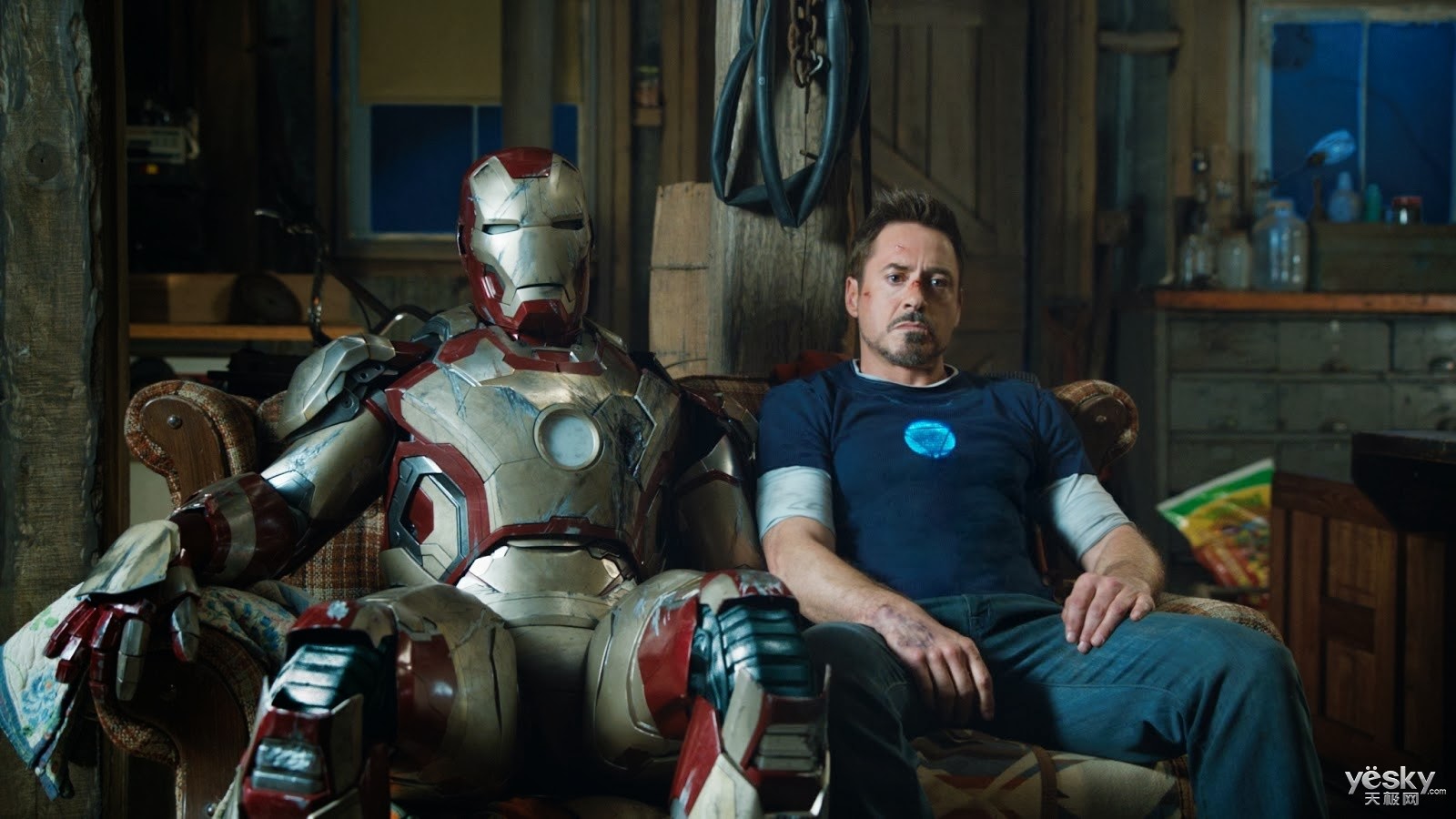
8) Iron Man 3
It was always going to be a tough gig, following up The Avengers. Luckily for Marvel, putting Lethal Weapon scribe Shane Black in the director’s chair proved to be a smart decision, for IM3 is an impressive threequel that manages to be funny, action-packed and surprisingly cerebral on a psychological level – if you think about it, this is a film about a man who tries to overcome his insecurities by creating better mechanical versions of himself. Yes, Iron Patriot is pretty useless and fans were outraged about the Mandarin twist, but you’d be hard-pressed to find another superhero flick in 2013 that was as bold and ballsy as this. Who needs the Avengers? 


7) Pacific Rim
Giant robots versus giant monsters – it’s the sort of concept most people would dismiss as “juvenile”, the sort of activity you’d engage in the playground during your childhood but that you’ve now outgrown supposedly because you’ve “matured”. Fuck most people. In the hands of visionary director Guillermo Del Toro, Pacific Rim is a stylishly shot film that pays loving homage to the monster movies of the past, without forgetting to focus on the more human elements of the story, as each towering robot necessitates two pilots with a personal connection in order for them to function. The best blockbuster of the summer, hands and claws down.


6) Captain Phillips
It’s tricky picking between Zero Dark Thirty and Captain Phillips. Both are remarkable examples of guerrilla, documentary style filmmaking, but while the former chronicles a CIA operative’s hunt for Osama Bin Laden, the latter is the tale of an ordinary man’s fraught negotiation with a gang of Somali pirates and feels more relatable in comparison. What’s most impressive however is director Paul Greengrass’ resolve to avoid triumphalism and make us feel for the pirates too, as the odds are gradually stacked against them to the point of desperation. As for the titular captain’s nervous breakdown at the end of the film, it’s a heartbreaking scene and a powerful reminder that Tom Hanks is still one of Hollywood’s finest actors.


5) Filth
Some films are meant to be one-man shows and Filth is beyond doubt James McAvoy’s baby and his finest performance to date. As corrupt DS Bruce Robertson, he is a conniving little shit of a man with no morals to speak of, but somehow manages to keep us hooked in with his blend of ruthless ambition and seductive charisma. It’s the kind of role that in an ideal world would be up for an Oscar, but if the Academy was too afraid to nominate Michael Fassbender and his penis for last year’s Shame, there’s no chance in hell McAvoy will be picking up a golden baldie anytime soon. It doesn’t matter, for Filth remains regardless an excellent adaptation of Irivine Welsh’s book of the same name, and the closest fans will get to a Trainspotting follow-up. 


4) Rush  
If only there were more biopics like Rush. Instead of going through the overfamiliar rise and fall trajectory of other films of the genre, Peter Morgan’s script is more interested in the rivalry between playboy pilot James Hunt (Chris Hemsworth, reliably charming) and methodical driver Nicki Lauda (Daniel Bruhl, surprisingly profound) both of whom were at the centre of the F1 craze throughout the ‘70s and ‘80s. There’s no need to be a motor-head to appreciate what’s on show here, all you need to do is take in the strong performances and before you know it you’ll find yourself lapping up this riveting sports drama. It’s 2013’s Senna.  


3) Nebraska
Nebraska is one of those films that on the surface seems to be about nothing. This is mainly due to its minimal dialogue and static shots, while Alexander Payne’s decision to film in black and white is sure to put off mainstream viewers. Which is a pity, because it means they missed out on the most bittersweet movie of the year. Payne’s latest offering is a delicate portrayal of a family on its way to losing its paterfamilias to Alzheimer’s, with results ranging from amusing to tear-jerking. It’s easy to commend veteran actor Bruce Dern for his touching lead performance, but the truth is June Squibb, Will Forte and Breaking Bad’s Bob Odenkirk all deserve equal praise for pulling off the rarest of things in Hollywood: portraying a family that feels genuinely real, with all their subtle quirks and imperfections. 


2) Before Midnight
Iron Man 3 may have scooped up all the bucks at the box office, but back in the early summer days there was a small contingent of cinemagoers that was eagerly anticipating a different threequel. Picking up 9 years after we last saw them playfully flirt about in a Parisian apartment, this time we caught up with Jesse and Celine in Greece, who in the meantime have moved on from intellectualizing romance and chance encounters to debating adulthood and responsibilities they never thought they’d have to contend with when they first met in Vienna way back in the ‘90s. With nostalgic musings and one particularly nasty fight dominating most of the film, for some fans Before Midnight may be quite a departure from the previous rose-tinted installments but, in an industry that is constantly rebooting and remaking all of its star properties, this is clearly an indie franchise that is not afraid to mature with its characters. And for that reason, we should all be looking forward to seeing Jesse and Celine again in 2022.


1) Gravity
What contemporary Hollywood seems to be lacking the most is blockbusters with original high concepts. Far too often these days we see our multiplexes showing almost exclusively comic book movies, teen novel adaptations, reboots and sequels to movies that happened over 10 years ago that no one really wants to see. Gravity harks back to a time when audiences went to see a film purely because they were hooked on its gripping premise, and while there’s a chance that Alfonso Curaròn’s flick would have made its budget back on curiosity factor alone, it helps that he’s actually delivered a perfectly executed film that is both thrilling and stunning to look at. Majestic vistas of Earth, deadly shrapnel silently tearing up shuttles and a distressingly believable performance by Sandra Bullock all contribute towards a movie that begs to be seen on the big-screen or at the very least on a 55 inch HD TV. It’s that good.   

Wednesday, 11 December 2013

Nebraska

There are two things that Alexander Payne does better than any other current filmmaker: family and road trips. It is rather fitting then, that Nebraska is about a son who drives his senile father across the Midwest to claim $1 million dollars the latter naively believes to have won. As is the case with quality road movies, it’s not the destination but the journey that shapes our characters. Shot in iconic black and white and boasting believable performances all around, this is a sincere and affecting study on family ties that reveals just how much we are defined by our parents, no matter how screwed up we think they are.


5/5

Friday, 15 November 2013

Philomena

Philomena is one of those low-key dramedies that gives British cinema a good name. Lovingly crafted and wonderfully acted, it tells the true story of disgraced journalist Martin Sixsmith, who decides to write a human interest story about an elderly Irish woman’s search for the son she was forced to give up during her adolescence. With M now out of the picture, it’s nice to see Judi Dench play a more relatable charming old lady, but it is Steve Coogan’s admirably restrained performance that lingers in mind. A few Partidge-isms do creep in here and there ("Fucking Catholics!"), but there’s enough talent on display to suggest future “serious” performances wouldn’t go amiss.

4/5

Monday, 11 November 2013

Gravity

Gravity is the kind of film that should come with a big flashing health warning during the opening credits, because the likelihood of experiencing multiple panic attacks over the following 90 minutes is decidedly high. And before you jump to conclusions, that is meant as an overwhelming endorsement. Here is an impeccably executed science-fact thriller that harks back to a time when films pulled in audiences on the strength of their premise alone (rather than because they were based on the latest best-selling teen novel or the hottest comic book property) and the set-up for Alfonso Cuaròn’s latest offering is only strengthened by its ruthless simplicity.

Picture the scene: high above the Earth’s atmosphere, a handful of astronauts loom into view, as they casually go about repairing the Hubble Telescope. There’s a joker (Paul Sharma) having fun with his tether in the absence of gravity; there’s the seasoned pro (George Clooney), who’s treating his last spacewalk like a walk in the park; and then there’s the rookie (Sandra Bullock), doing her best to hide all signs of apprehension as she works away on the telescope. Suddenly, they get an urgent message from Mission Control, warning them that a cloud of debris is heading their way with the velocity of a high-speed bullet. Within seconds, huge chunks of shrapnel proceed to slice up the shuttle, the Hubble telescope and crucially, the rookie’s safety lead, who is then hurled into deep space…

Caught your attention yet? Good, ‘cause that’s only the beginning and it only gets better. But revealing more details of the plot would mean spoiling what is surely the most gripping viewing experience of the year, so let’s focus instead on Gravity’s other assets.

For starters, its adherence to realism is remarkable, with real-life astronauts already praising the film’s veracity (despite Cuaròn’s admission that a few liberties had to be taken in the name of dramatic license). The afore-mentioned space shrapnel, in particular, offers a new form of on-screen threat which hasn’t been employed in previous space-set movies, but is just as devastating as a tornado or a tidal wave. The dead silence of open space is also effectively recaptured. There’s something eerie and otherworldly about seeing that level of destruction without the deafening sound of an explosion, with only Stephen Price’s score providing all the cues.

With this much realism going on, you’d be half-inclined to believe Cuaròn actually shot the whole thing in space for real, a theory that is supported by the Mexican director’s long, uninterrupted shots (the first cut clocks in around the 15 minute mark). There’s no point in pretending to know how he pulled it all off, so let’s just say that, thanks to the combination of state of the art CGI and an adrenaline-fuelled performance from Sandra Bullock, you’ll get pretty good idea of what it feels like to be left alone and to your own devices all the way up there.

What’s also pleasing is that, in an age when far too many blockbusters get pointless 3D conversions just for the sake of making a few extra bucks, this is one film that truly should be enjoyed in three dimensions. Not for the novelty of seeing large objects being flung at you from the Earth’s orbit (although there’s nothing wrong with that), but because for once the 3D brings the visuals to vibrant life. After all, if you’re going to see a majestic shot of Earth from outer space, you’ll want to feel like you’re actually there.

So there you have it: Gravity is a popcorn movie that feels like a rollercoaster ride, yet also treats its audience to an original concept and is beautifully put together. The best film of 2013? Oh, go on then.


5/5